
The Short Answer — and Why It Is More Nuanced Than It Appears
ISO 8573-1 Class 0 certification is mandatory when the consequences of oil contamination in the compressed air stream are unacceptable — either from a product quality, patient safety, food safety, or regulatory compliance perspective. The standard itself does not mandate its own adoption; no regulation in most jurisdictions says “you must certify to ISO 8573-1 Class 0.” What regulations do say — across pharmaceutical GMP frameworks, food safety standards, and electronics cleanroom requirements — is that compressed air must not contaminate the product or process it contacts. Class 0 certification is the universally recognised method of demonstrating compliance with those requirements. In practice, any facility where oil in the compressed air would cause a product failure, a safety incident, or a regulatory nonconformance should treat Class 0 as mandatory. The industries and applications where this is true are broader than most buyers initially assume.
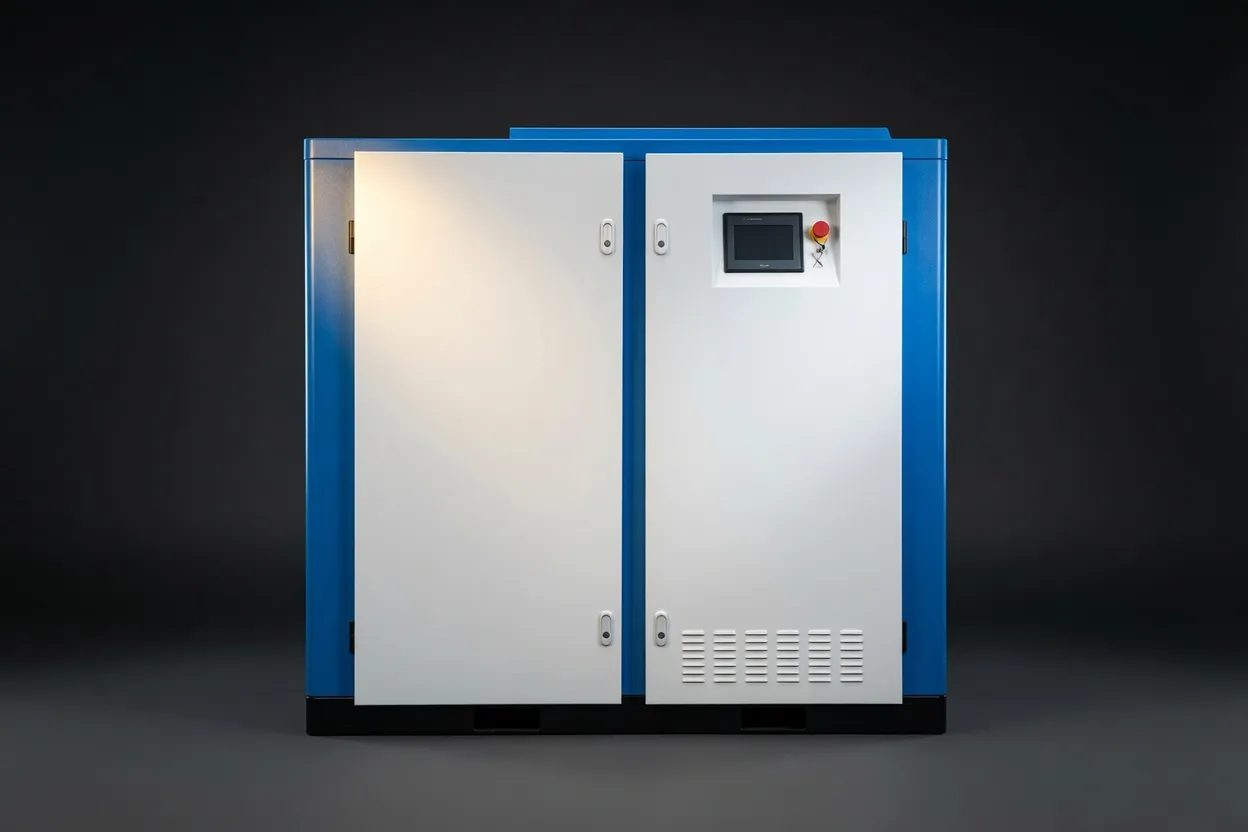
Industries Where Class 0 Is a Regulatory Requirement
In the following sectors, Class 0 oil content in compressed air contacting the product or process is either explicitly required by regulation or universally adopted as the industry minimum standard because regulators expect it:
Where Class 0 Is Good Practice But Not Formally Mandated
Beyond sectors with explicit regulatory requirements, Class 0 is increasingly adopted as best practice in applications where the cost of oil contamination — in product quality, equipment damage, or customer complaints — justifies the investment in oil-free technology. Automotive painting and surface coating operations require oil-free air for spray booths and electrostatic coating guns, where even trace oil in the air supply causes fisheye defects and coating adhesion failure — a direct product quality and rework cost issue, even if no specific regulation mandates Class 0 by name. Textile plants using air-jet looms require oil-free compressed air to prevent fabric staining and nozzle blockage — again a product quality issue rather than a regulatory one. Laboratories, research facilities, and calibration environments often specify Class 0 as a precautionary measure to prevent contamination of sensitive analytical instruments and reference materials.
Class 0 Mandatory Decision Framework
| Question | Answer | Class 0 Implication |
|---|---|---|
| Does air contact the product directly? | Yes | Class 0 mandatory in pharma, food, medical |
| Is the product regulated (drug, food, device)? | Yes | Class 0 required to demonstrate GMP/HACCP compliance |
| Would trace oil cause product failure or rework? | Yes | Class 0 strongly recommended (painting, textile, lab) |
| Is the air supply to a cleanroom environment? | Yes | Class 0 required to maintain cleanroom classification |
| Is the air purely for non-contact mechanical actuation? | Yes | Class 1–2 typically sufficient |
| Does the customer specification require Class 0? | Yes | Class 0 contractually mandatory regardless of application |
The Rising Frequency of Customer-Mandated Class 0
Beyond regulatory requirements, Class 0 is increasingly mandated by purchasing specifications from large manufacturing customers to their suppliers. A Tier 1 automotive manufacturer requiring body panel painting to zero-defect standards will specify Class 0 compressed air in their supplier quality requirements. A major food retailer running supplier audits against BRC Global Standard will expect evidence of Class 0 air at all product contact points. A pharmaceutical customer requiring contract manufacturing will specify Class 0 as a baseline in the supply agreement. These customer-mandated requirements mean that Class 0 is relevant not just to facilities producing regulated products themselves, but to their entire supply chain. A contract packager, a label printer, a components manufacturer — any of these may face Class 0 requirements driven by downstream customer specifications rather than direct regulatory exposure. The working principle of water-injected oil-free screw compressors makes them the cleanest way to meet these requirements at source.

Frequently Asked Questions
Confirm Your Class 0 Requirement — We Will Help You Specify Correctly
Hangzhou Ever Power’s application engineers can review your regulatory requirements, customer specifications, and application risk profile to confirm the correct air quality class for your project.
Hangzhou Ever Power Air Compressor Co., Ltd. · Shenhua Road, Hangzhou 310031 · +86 13083988828