Overview: What Is Rotor Seizure on Water-Injected Oil-Free Compressor
Rotor seizure (also called air end jamming) refers to the complete lock-up of male and female screw rotors inside a water-lubricated oil-free screw air compressor. As the core heart of every oil-free rotary screw compressor, the twin rotor assembly relies fully on a continuous purified water film for isolation and lubrication. Once the water film fails or foreign solids fill the tiny rotor clearances, rotors cannot rotate freely, triggering motor overload alarms, tripped circuit breakers or even irreversible damage to the air end. Unlike oil-flooded compressors with oil carbon blockages, water injected compressor seizure stems from water quality failure, scaling, bearing damage, liquid hammer and improper operation. Unaddressed jamming will lead to expensive air end replacement and unplanned factory downtime, especially for food, pharmaceutical plants running 24-hour production lines with strict ISO Class 0 compressed air demands. This guide systematically breaks down every real-world root cause, step-by-step emergency handling and long-term preventive maintenance, solving the top maintenance pain point for facility engineers managing oil-free air compressor systems.
1. Primary Cause: Hard Mineral Scaling From Unqualified Circulation Water
This accounts for over 60% of rotor seizure failures in water lubricated compressor units. Standard tap water or softened water still contains calcium, magnesium and silica ions. Without RO water treatment to lower conductivity below 10μs/cm, mineral precipitates build layer by layer on rotor tooth surfaces, water injection nozzles and cylinder inner walls during long runtime. Hard scale gradually narrows the designed rotor clearance (only tens of microns wide) until rotors lock completely during startup or full-load operation. Even partial scaling breaks the protective water film, creating metal-to-metal friction that accelerates abrasion and permanent seizure. Many plant operators skip regular water filter replacement, worsening scaling speed and shortening air end service life by more than half.
Targeted Solutions for Scaling Jamming
- Install matched RO pure water system to control water conductivity under 10μs/cm permanently;
- Replace water pre-filter and precision filter every 3–6 months as scheduled;
- Run neutral descaling solution circulation cleaning every quarter for closed water loops;
- Add online conductivity monitoring sensor with auto-alarm for abnormal water quality fluctuations.
2. Second Common Cause: Water Circulation System Malfunction & Water Film Collapse
Water injected compressor depends on stable, continuous water flow to form an isolation film between meshing rotors. Any breakdown in the water circulation loop instantly eliminates lubrication and cooling protection, leading to thermal expansion and rotor contact jamming. Typical circulation faults include clogged injection nozzles, failed circulation water pump, air locks inside water pipelines, blocked heat exchangers and insufficient water tank liquid level. When water supply cuts off mid-operation, compression temperature surges above 120°C within seconds, causing rotor metal thermal expansion that erases clearance gaps and locks the air end. Even short-duration water loss will leave permanent scratch marks on rotor profiles, raising seizure risk in subsequent startup cycles.
Repair & Prevention Steps
After pump or pipeline blockage triggers seizure, power off the unit completely before disassembly. Flush all water nozzles and heat exchangers to remove scale and debris, test pump flow pressure under rated load, and bleed trapped air from every horizontal pipeline segment. For long-term prevention, enable PLC low water flow auto-shutdown protection, and add weekly manual inspection of water tank liquid height and pump operating current to catch hidden circulation faults before rotor damage occurs.
3. Mechanical Failure: Bearing Wear & Rotor Axis Misalignment
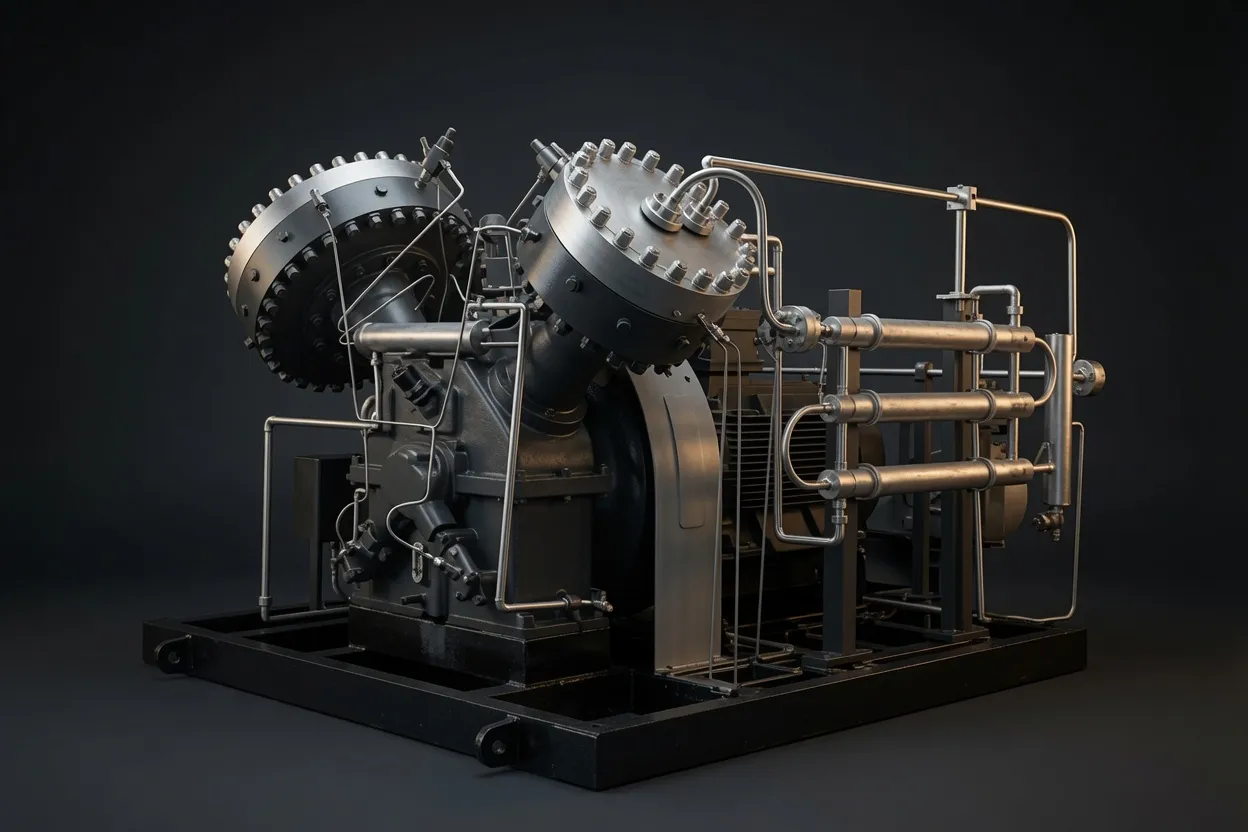
Bearings are the critical positioning components that maintain stable rotor clearance in oil-free rotary screw compressor. When bearings reach end-of-life service hours or suffer from insufficient water lubrication, pitting, cracking and cage breakage will appear. Damaged bearings lose control of rotor radial and axial position, leading to rotor collision with cylinder walls and mutual meshing seizure. Twin screw water-lubricated models bear larger axial thrust than single screw variants, making thrust bearing wear a frequent failure source without regular inspection. Improper post-overhaul bearing preload adjustment is another human-induced cause of axis offset and rotor lock-up.
Solutions For Bearing-Driven Seizure
- Inspect bearing vibration and temperature data every 3,000 operating hours;
- Replace full bearing sets once service life hits 40,000 running hours;
- Use OEM anti-corrosion bearing parts matched for water injection working conditions;
- Calibrate rotor axial clearance with dial gauge after every air end overhaul.
4. Foreign Object Intrusion Into Compression Cavity
Damaged intake compressed air filter allows workshop dust, metal shavings, pipeline gasket fragments and rust flakes to be sucked into the air end. These hard foreign bodies wedge into micron-scale rotor gaps during rotation, instantly stopping rotor movement and causing seizure. For factories near machining workshops or mining sites, heavy dust loads accelerate filter clogging and breakthrough risk. During overhaul or pipeline maintenance, leftover welding slag and sealing debris are common hidden contaminants that trigger jamming after equipment restart. Even tiny rust particles from idle unit internal pipelines will accumulate between rotors during long shutdown periods.
Handling & Preventive Measures
If foreign object seizure occurs, fully disassemble the air end to clean all rotor surfaces and cylinder inner walls, measure rotor profile abrasion loss to judge whether reconditioning is required. Replace high-efficiency multi-layer intake air filters on schedule; seal pipeline openings during maintenance work to block debris entry. For standby water injected compressor units, perform weekly manual barring rotation to disperse accumulated rust particles inside the compression chamber and avoid static jamming.
5. Improper Operation & Long-Term Idle Corrosion Seizure
Multiple operator misoperations directly lead to water-lubricated compressor rotor lock-up. The most frequent error is cold startup without pre-circulating purified water, which runs rotors without protective water film. Emergency shutdown under full load combined with residual high-temperature water trapped inside the unit accelerates internal rust formation. For seasonal factories that suspend production for months, stagnant water inside pipelines and air ends creates rust deposits that stick rotor teeth together when restarted. Reverse rotation caused by wrong motor wiring also generates extreme axial thrust that scratches and locks twin screw rotors within seconds of startup.
Standard Operating Specifications To Avoid Jamming
- Mandatory pre-water circulation for 60 seconds before every unit startup;
- Drain all circulating water completely for long holiday shutdowns;
- Check motor rotation direction after every electrical maintenance;
- Implement daily barring rotation for standby oil-free compressor equipment.
6. Emergency Step-by-Step Troubleshooting When Rotor Seizure Happens
| Emergency Step | Detailed Operation Standard |
|---|---|
| Step 1 Cut All Power Supply | Immediately disconnect main power breaker, never attempt forced startup which burns motor coils and worsens rotor damage |
| Step 2 Inspect Alarm Logs | Check PLC history for low water flow, overtemp, overload or conductivity fault records to locate root cause category |
| Step 3 Manual Barring Test | Use barring wrench to test rotor rotation resistance; slight sticking = light scaling, fully locked = severe mechanical damage |
| Step 4 Water System Inspection | Check pump output, filter clogging, water conductivity and nozzle blockage for scaling-induced seizure |
| Step 5 Disassembly Diagnosis | Drain all water, remove air end cover to check scaling, foreign debris and bearing abrasion condition |
| Step 6 Target Repair & Test Run | Clean/Replace damaged components, calibrate rotor clearance, run low-load test after reassembly |
Many maintenance teams skip power-off protection and repeatedly trigger startup after jamming, causing irreversible motor burnout and deeper rotor scoring damage. Following this standardized 6-step emergency process can accurately classify failure causes and avoid secondary equipment loss during troubleshooting for water injected compressor air end seizure.
7 Long-Term Preventive Maintenance Schedule To Eliminate Rotor Seizure Risk
Daily Inspection Items
- Check water tank liquid level
- Monitor real-time water conductivity value
- Observe unit running noise & vibration
- Check intake air filter pressure difference
Quarterly Maintenance Tasks
- Replace water precision filter
- Circulating descaling cleaning
- Inspect pump operating pressure
- Clean cooling heat exchanger surface
Annual Overhaul Checklist
- Disassemble air end to check rotor scaling
- Measure bearing wear clearance
- Replace aging sealing components
- Calibrate all temperature & pressure sensors
Strict execution of this three-tier maintenance plan eliminates over 95% of water-lubricated oil-free compressor rotor seizure faults. Most jamming failures trace back to skipped filter replacement, ignored water quality monitoring and delayed bearing inspection, which are fully avoidable with standardized facility maintenance workflows. This routine also lowers overall air compressor energy consumption and extends total service life of the core air end assembly, cutting long-term total cost of ownership for manufacturing plants.