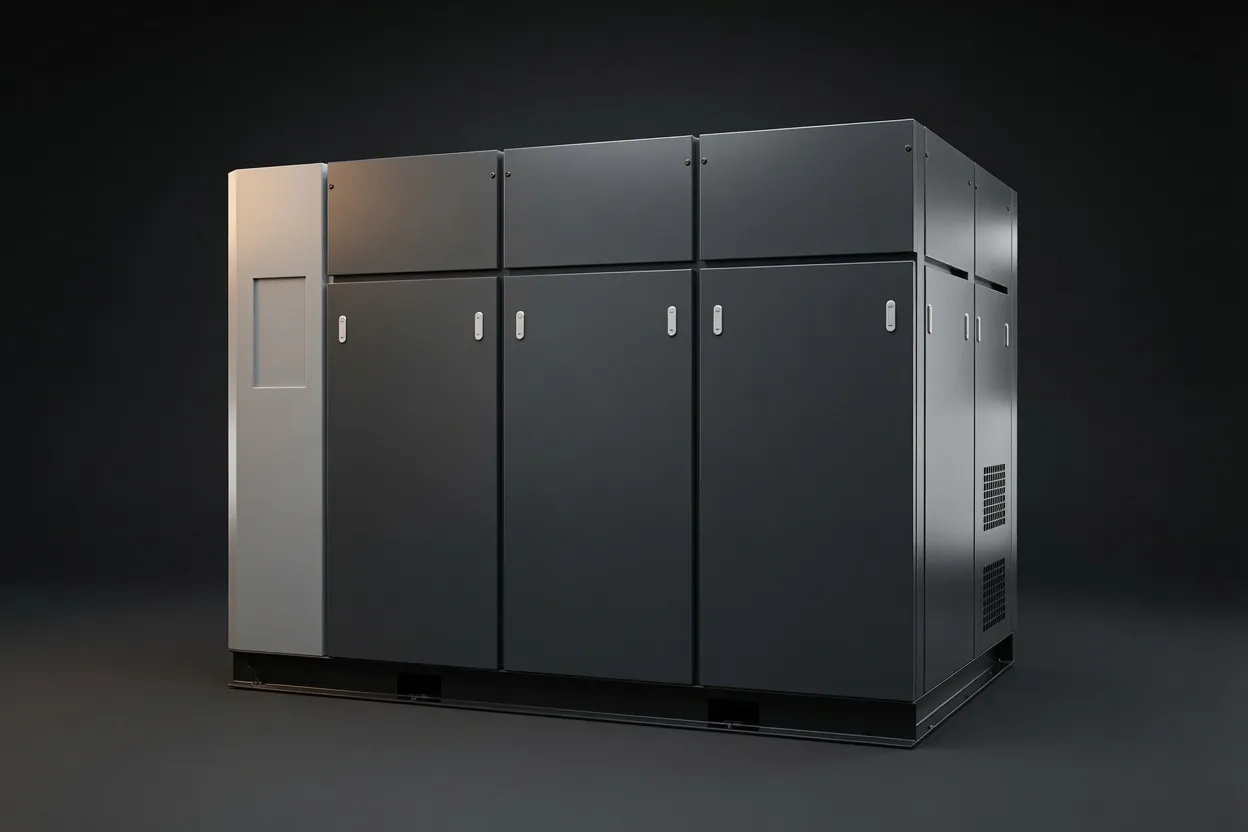
1. Basic Temperature Standard & Hazards Of Overheating Oil-Free Compressors
Oil-free air compressors split into two mainstream types: water-injected oil-free screw compressor and dry oil-free rotary screw compressor, which have completely normal discharge temperature ranges. For water lubricated oil-free units, standard stable exhaust temperature should stay below 45°C; dry two-stage oil-free screw compressors run at 140–160°C under normal full load, with auto-shutdown protection triggered above 180°C. Sustained high discharge temperature is one of the most destructive faults for ISO Class 0 compressed air equipment. Long-term overheating accelerates rotor coating aging on dry oil-free models, easily breaking air purity compliance with ISO 8573-1 standards. For water injected compressor, high temperature evaporates protective water film, causing metal rotor friction, scaling and rotor seizure. Overheating also sharply lifts air compressor energy consumption, expands total cost of ownership, and triggers frequent production shutdowns due to overtemp alarms. This troubleshooting guide separates fault sources for water-lubricated and dry oil-free equipment, providing ordered inspection steps for maintenance engineers to quickly locate root causes without blind disassembly.
2. Step 1: Quick Preliminary Inspection (Eliminate Simple External Factors)
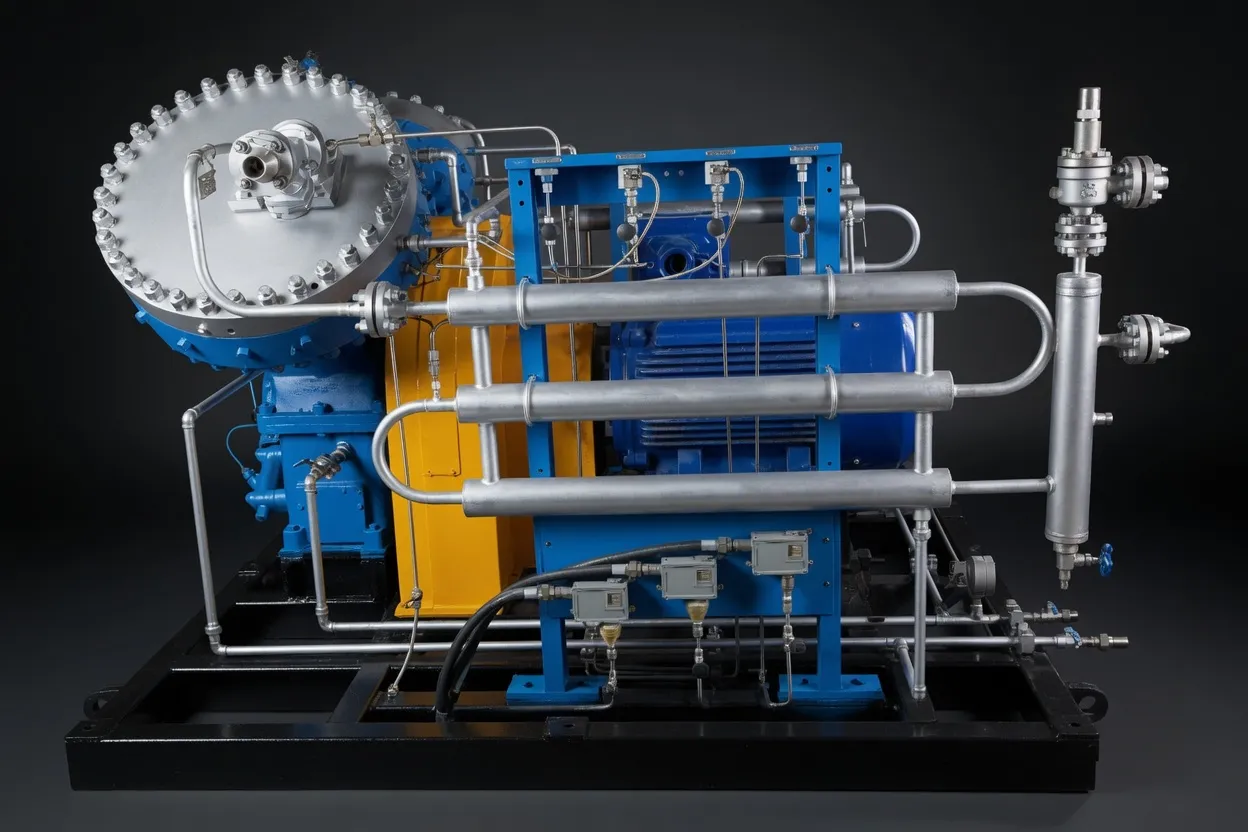
Before disassembling any core components, finish 4 fast external checks to rule out easily fixed overheating triggers, which cover over 30% of on-site high-temperature failures:
- Measure compressor room ambient temperature; maximum allowable working environment is 40°C. Poor ventilation, hot air recirculation or heat sources near the unit directly push discharge temperature up.
- Check intake compressed air filter pressure difference. Severe blockage raises air inlet resistance, increases compression load and generates extra heat during operation.
- Confirm actual production air demand matches compressor rated flow. Long-term full overload operation continuously raises exhaust temperature threshold.
- Read PLC temperature sensor data, compare with handheld thermometer to judge whether sensor drift causes false high-temperature alarms.
Solutions for preliminary faults: Install ventilation exhaust fans for sealed compressor rooms; replace clogged intake filters immediately; adjust air pressure setting to avoid continuous full-load operation; calibrate or replace faulty temperature transmitters to eliminate false alarm interference.
3. Step 2: Cooling System Inspection (Core Fault Source Classification)
Cooling system failure accounts for over 60% of high discharge temperature faults, and inspection items differ greatly between water-lubricated oil-free compressor and dry oil-free screw compressor, which are sorted separately below for targeted troubleshooting:
3.1 Cooling Faults For Water-Injected Oil-Free Compressors
- Circulation pump breakdown / low water flow: Insufficient injected water cannot absorb compression heat in time, discharge temperature surges instantly.
- Blocked water injection nozzles: Uneven water film formation leads to local overheating of rotor surfaces.
- High water conductivity & internal scaling: Scaling blocks heat exchange pipelines, reducing heat transfer efficiency sharply.
- Water tank liquid level too low: Shortage of circulating water breaks continuous cooling circulation.
Repair solutions: Test pump running pressure and replace damaged water pumps; disassemble and flush blocked nozzles with descaling liquid; run full closed-loop descaling cleaning; replenish qualified RO purified water to standard liquid level.
3.2 Cooling Faults For Dry Two-Stage Oil-Free Screw Compressors
- Intercooler & aftercooler fins blocked by dust: Heat cannot be discharged outside the machine.
- Cooling fan damage, reversed rotation or loose fan belt: Insufficient forced air cooling capacity.
- Timing gear oil circuit blockage: Gear lubricating oil loses heat dissipation function, transferring heat to compression cavity.
- Heat exchanger internal scaling for water-cooled dry models: Poor heat exchange efficiency.
Repair solutions: Blow clean cooler fins with high-pressure air gun; replace fan motor or adjust belt tension; disassemble and flush oil pipeline for gear system; circulate descaling agent to remove internal mineral deposits.
4. Step 3: Mechanical Air End Overheating Troubleshooting
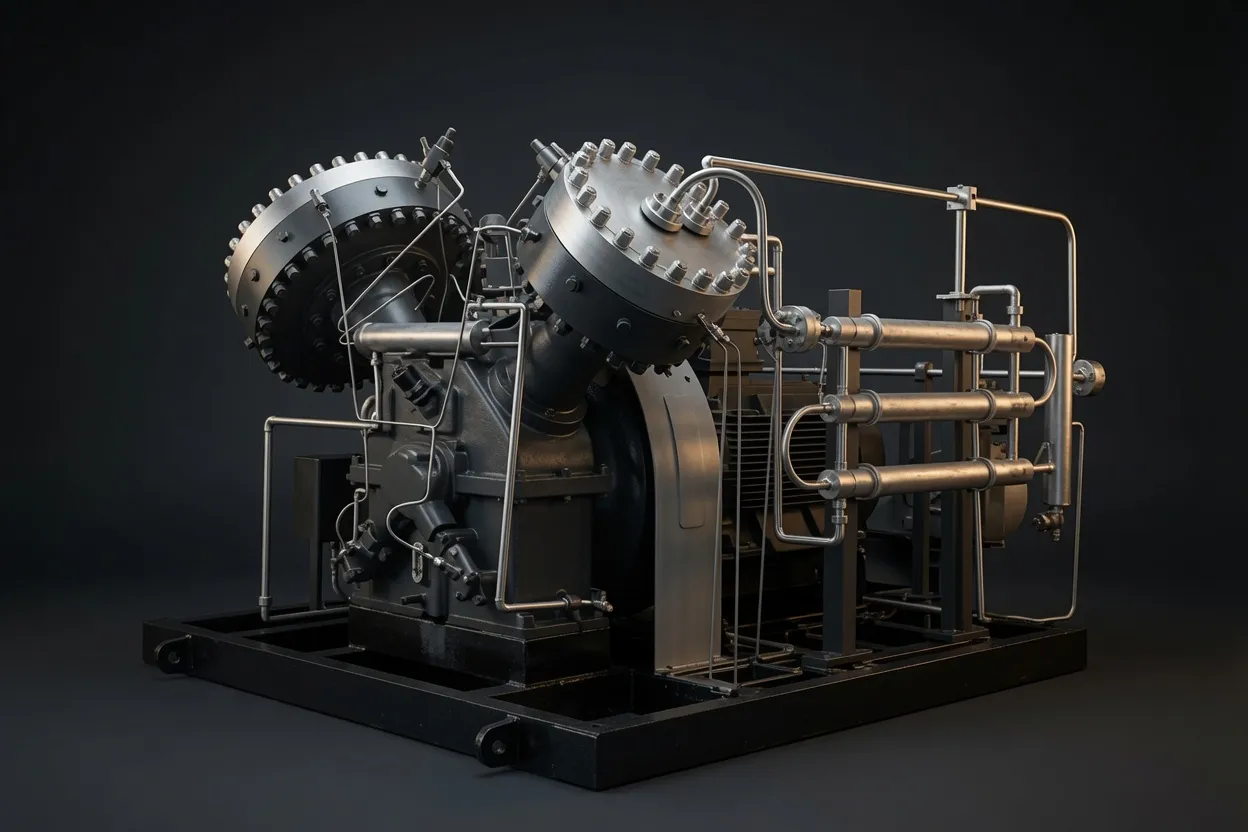
If cooling system inspection shows no abnormality, the overheating root cause lies inside the air end mechanical assembly, the most dangerous fault type that easily triggers permanent equipment damage:
- Bearing wear & rotor axis offset: Rotor friction generates massive extra heat during high-speed rotation, raising exhaust temperature continuously.
- Rotor scaling / coating peeling: Narrowed rotor clearance increases internal air leakage and compression heat output.
- Foreign objects trapped in compression cavity: Hard debris creates friction heat during meshing operation.
- Overloaded timing gear set (dry oil-free only): Gear abrasion produces heat transferred to secondary compression stage.
Troubleshooting & repair steps: Shut down power and perform barring test to judge rotor resistance; disassemble air end to clean scaling and foreign matter; replace worn bearing groups and recalibrate rotor clearance; overhaul damaged timing gears for dry oil-free units. Delayed maintenance of mechanical overheating will directly lead to rotor seizure and expensive air end replacement costs.
5. Step 4 Electrical & Control System Fault Inspection
Abnormal electrical operation is a hidden overheating cause easily ignored by maintenance personnel, including 3 typical fault types:
- Motor overload & three-phase current imbalance: Abnormal motor loss generates extra heat, conducting to compression cavity.
- VSD variable speed drive compressor inverter overheating: Inverter heat radiates to unit body and raises overall temperature.
- Unloading valve failure: Compressor stays full-load state without pressure relief, maintaining high compression heat output.
Handling methods: Test three-phase current balance and check motor winding aging; clean inverter radiator dust and add auxiliary heat dissipation fans; disassemble, clean or replace stuck unloading valve components to restore automatic load adjustment function.
6 Standard Troubleshooting Workflow Table (Water vs Dry Oil-Free Compressor)
| Inspection Order | Water-Lubricated Oil-Free Compressor | Dry Oil-Free Screw Compressor |
|---|---|---|
| 1. External Environment & Filter | Room temp + intake filter check | Room temp + intake filter check |
| 2. Core Cooling System | Water pump, nozzle, water quality | Cooler fan, intercooler, gear oil circuit |
| 3. Air End Mechanical Parts | Bearing, rotor scaling, foreign debris | Bearing, rotor coating, timing gear |
| 4. Electrical Control Parts | Motor, VSD inverter, unloading valve | Motor, VSD inverter, unloading valve |
| 5. Sensor Calibration | Discharge temp & water conductivity sensor | Stage temperature & pressure sensor |
Follow this unified inspection sequence to avoid blind disassembly and reduce maintenance time by over 50%. Most maintenance personnel directly disassemble the air end while ignoring simple cooling system blockages, wasting labor hours and delaying factory air supply recovery.
7 Long-Term Preventive Measures To Avoid Recurring Overheating
After troubleshooting and repairing high-temperature faults, implement regular maintenance standards to prevent repeated overheating alarms and extend oil-free rotary screw compressor service life:
For Water-Injected Units
- Replace water filter every 1 month to control scaling
- Quarterly full circulation descaling cleaning
- Daily monitor water conductivity index ≤10μs/cm
- Weekly check pump flow and nozzle unblocking
For Dry Oil-Free Units
- Blow coolers clean every 2 weeks in dusty workshops
- Inspect fan belt tension monthly
- Change timing gear oil per maintenance cycle
- Annual rotor coating thickness inspection
Sticking to corresponding maintenance schedules can reduce overheating failure frequency by over 80%, stabilize compressed air quality to meet ISO Class 0 standards, and cut air compressor energy consumption by 8–16% long-term.