
Why Purchase Price Is the Wrong Starting Point
Most capital equipment purchases begin with a budget figure. Engineering specifies a compressor, procurement solicits quotes, finance approves the lowest number, and the equipment arrives. This process optimises for the wrong variable. For a water-injected oil-free screw compressor running 6,000–8,000 hours per year, the purchase price typically represents 15–20% of the total money spent on that machine over its service life. The remaining 80–85% is electricity, maintenance, spare parts, water treatment, and eventually major overhaul or replacement. A compressor that costs 20% more to buy but consumes 15% less electricity saves more money in year three than the entire purchase price premium — and continues saving for the following twelve to seventeen years. Total cost of ownership (TCO) analysis is not a theoretical exercise; it is the calculation that determines whether the cheaper machine was actually cheaper.
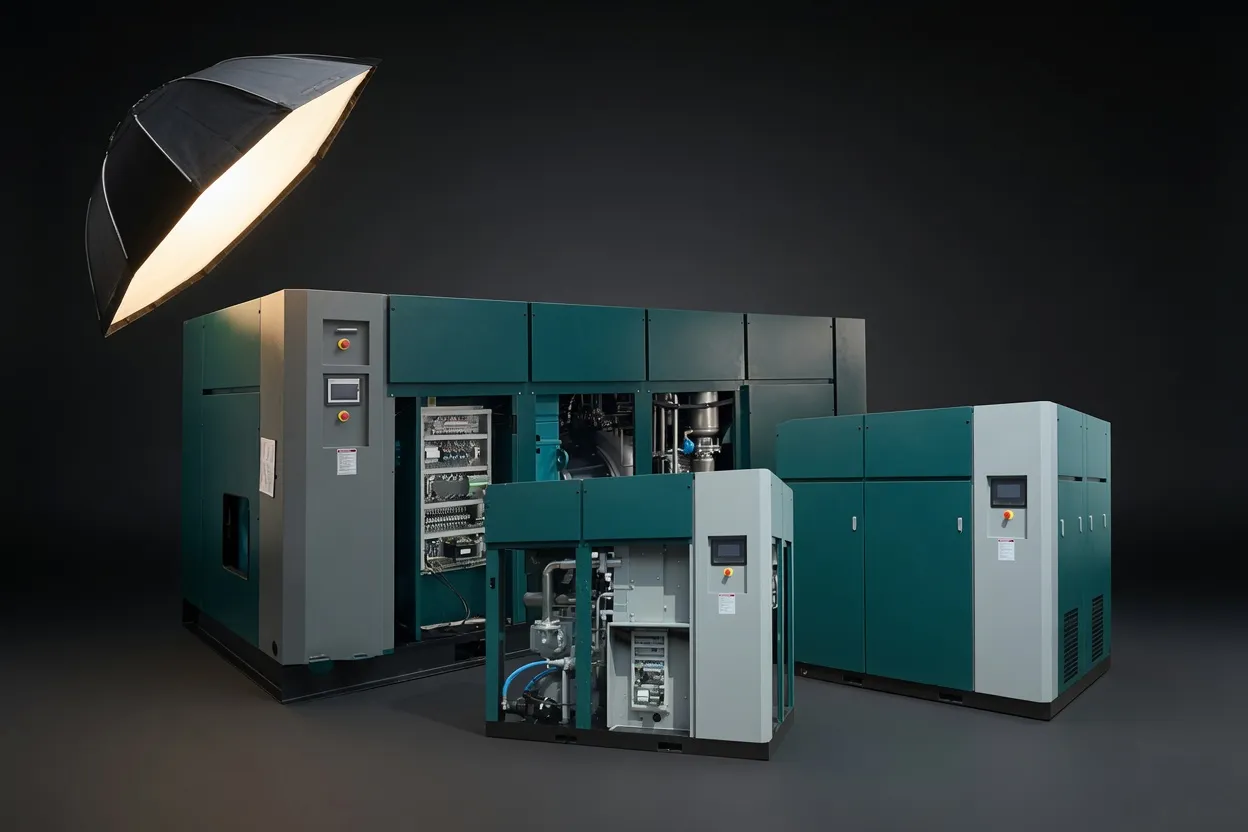
The Five Cost Components of a Water-Injected Compressor TCO
A rigorous total cost of ownership model for a water-injected screw compressor covers five distinct cost categories. Each must be estimated and discounted over the analysis period — typically ten years, which aligns with most manufacturers’ major overhaul intervals.
How to Calculate the Energy Cost Component
Energy cost is the figure that most dramatically changes the TCO ranking between suppliers. The calculation is straightforward:
Annual Cost = Annual kWh × Electricity Rate ($/kWh)
10-Year Energy Cost = Annual Cost × 10 × Escalation Factor
A worked example: a 132 kW water-injected compressor with specific power of 5.8 kW/m³/min delivering 22.7 m³/min FAD, running at 85% average load factor for 7,200 hours per year, at an electricity rate of $0.12/kWh. Annual energy cost = 132 × 0.85 × 7,200 × 0.12 = approximately $97,200. Over ten years with a 3% annual electricity price escalation, the discounted energy cost approaches $1.1 million. A competitor’s machine with 15% higher specific power — perhaps due to a less efficient rotor profile or a fixed-speed drive where VSD would suit the load profile — adds approximately $165,000 to the ten-year energy cost. This is the number that dwarfs purchase price differences.
Maintenance Cost: What Scheduled Service Actually Costs
| Service Item | Interval (hrs) | Approx. Cost | 10-Year Frequency |
|---|---|---|---|
| Water filter element | 2,000–4,000 | $80–200 | 18–36 times |
| Air inlet filter | 2,000–3,000 | $60–150 | 24–36 times |
| Water separator element | 4,000–6,000 | $200–500 | 12–18 times |
| Water circuit flush | 4,000–6,000 | $150–300 | 12–18 times |
| Shaft seal replacement | 16,000–20,000 | $800–2,000 | 3–4 times |
| Major rotor overhaul | 40,000–60,000 | $8,000–20,000 | Once (if applicable) |
Water Treatment: The Cost That Oil-Injected Machines Do Not Have
Water-injected compressors require RO-treated water, which means a reverse osmosis unit, periodic membrane replacement, and water quality monitoring. This is a genuine cost difference compared to oil-injected alternatives, and it should be included honestly in the TCO model. An RO unit sized for a mid-range water-injected compressor consumes approximately 50–80 W of electricity and requires membrane replacement every 12–24 months at a cost of $150–400. The RO water consumption itself — 0.5 to 2 litres per operating hour depending on compressor size and ambient humidity — adds a negligible water utility cost. Conductivity and pH monitoring, whether by periodic manual testing or continuous inline sensors, adds a small annual consumables cost. Total annual water treatment cost for a typical 75–132 kW water-injected compressor is approximately $500–1,500 per year — real but modest when set against the $80,000–120,000 annual energy spend.
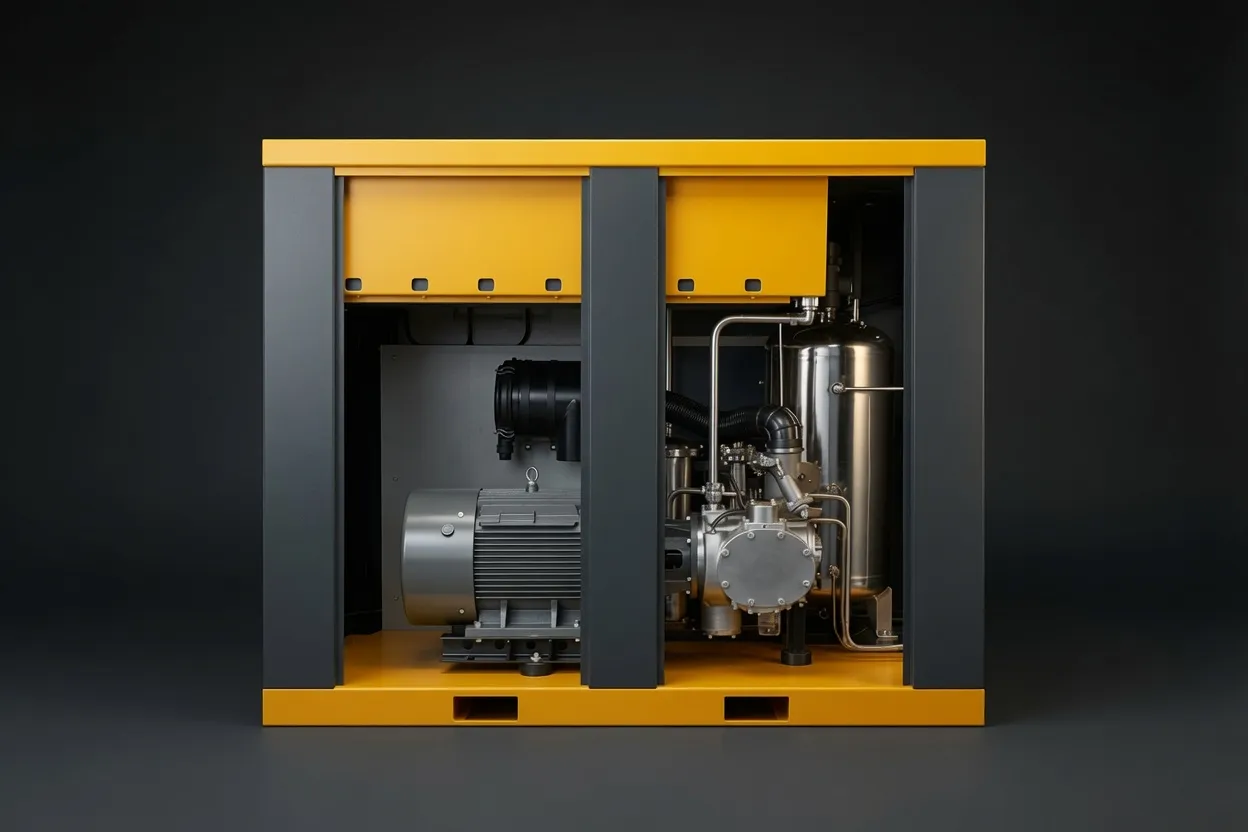
Water-Injected vs Oil-Injected: 10-Year TCO Summary
| Cost Category (132 kW, 10 yr) | Water-Injected Oil-Free | Oil-Injected + Filtration |
|---|---|---|
| Purchase + installation | ~$45,000 | ~$32,000 |
| 10-year energy cost | ~$1,050,000 | ~$1,230,000 |
| Maintenance & parts | ~$28,000 | ~$35,000 |
| Water treatment (10 yr) | ~$10,000 | $0 |
| Carbon adsorber replacement | $0 | ~$12,000 |
| Total 10-Year TCO | ~$1,133,000 | ~$1,309,000 |
Indicative figures based on 132 kW compressor, 7,200 hr/year operation, $0.12/kWh electricity, 15% energy saving for water-injected vs oil-injected. Actual figures will vary by site.
The Hidden Cost: Downtime and Product Quality Risk
No TCO model captures everything. Two categories of cost that do not appear in the spreadsheet but are genuinely real: production downtime when the compressor fails, and product quality incidents when compressed air quality falls below specification. For a production line generating $10,000–50,000 of output per hour, a four-hour emergency compressor repair costs more than most annual service contracts. For a food or pharmaceutical plant, a single oil contamination event from a failed carbon adsorber can trigger a product recall with costs measured in hundreds of thousands of dollars. A water-injected oil-free screw compressor with an integrated RO water treatment system, automatic water quality monitoring, and a properly followed service schedule removes both the compressor-as-single-point-of-failure risk (when backed by a standby unit) and the oil contamination risk category entirely. These risk reduction benefits belong in any complete investment justification, even if they resist precise quantification.
Frequently Asked Questions
Get a Full TCO Analysis for Your Application
Send us your operating hours, electricity rate, and flow requirement. We will build a complete 10-year total cost of ownership model comparing our water-injected oil-free compressor against your current or shortlisted alternative.
Hangzhou Ever Power Air Compressor Co., Ltd. · Shenhua Road, Hangzhou 310031, China · +86 13083988828