
This guide walks through every critical selection factor in the order a responsible buyer should address them: flow demand first, pressure second, operating environment third, then drive type, cooling method, water circuit design, and finally the certification evidence you need before signing a purchase order. Each section gives you the engineering logic behind the decision, not just a checklist to tick.
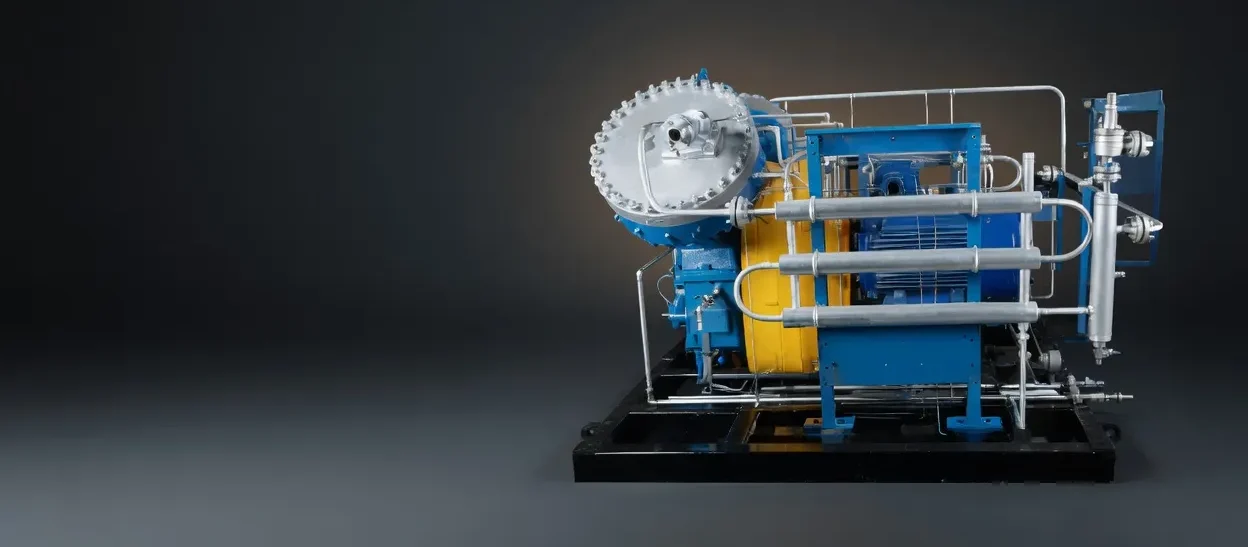
1. Establish Your Actual Flow Demand Before Anything Else
The single most expensive sizing mistake in any compressed air project is working from connected load rather than actual demand. In most industrial facilities, peak simultaneous demand runs 60–75% of installed capacity. Oversizing a water-injected screw compressor to cover every tool running at once produces a machine that spends most of its life unloading — cycling on and off, wearing valve components, and drawing power without producing useful work.
Calculate Free Air Delivery (FAD) from Real Consumption Data
FAD — Free Air Delivery — is the volume of compressed air a compressor delivers, measured at inlet conditions of 1 bar absolute, 20°C, and 0% relative humidity. Every manufacturer rates output in FAD (m³/min or CFM). To size correctly, sum the FAD consumption of every air-consuming tool, valve, cylinder, and instrument in simultaneous operation during peak shift. Then add a system leak allowance — typically 10–15% in a well-maintained plant, up to 30% in older facilities. Round the final figure up to the next standard model size, not beyond it.
For new installations without historical data, conduct a compressed air audit using a portable flow meter on an existing supply line or a calculated demand survey tool by tool. The audit data also reveals demand variation across shifts — critical for deciding whether a variable speed drive model makes financial sense.
Account for Future Capacity Growth
If the facility plans to add production lines within the compressor’s service life (typically 15–20 years for a water-injected machine), build in a growth margin. A common approach is to size the base compressor to current demand plus 15%, then specify the compressor room and pipework for a second parallel unit to be added later. Attempting to cover all future growth in the initial purchase leads to chronic overloading of the VSD or permanently low discharge pressure as load grows.
2. Set Working Pressure Based on End-Use, Not Tradition
Many plants run at 8 bar simply because that was the site standard twenty years ago. Water-injected oil-free screw compressors are typically offered in standard pressure ranges of 7–10 bar (100–145 psi), with some models reaching 13 bar for high-pressure applications. Running a 10-bar machine to supply a 6.5-bar process adds 10–15% to energy consumption for every bar of unnecessary pressure.
Map every end-use point and record its minimum required inlet pressure. Add the pressure drop across the distribution pipework, treatment equipment (dryer, filters), and flexible connections — typically 0.5–1.0 bar in a well-designed system. The result is the minimum discharge pressure the compressor must deliver. Specify this figure to the manufacturer; do not default to the next standard pressure bracket unless the process genuinely needs it.
For pharmaceutical and food applications where water-lubricated oil-free screw air compressors supply both instrument air and process air on the same ring main, identify the highest pressure consumer and design to that level — but consider whether a separate booster for a single high-pressure user might be more efficient than pressurising the entire system to that level.
3. Define the Operating Environment: Temperature, Humidity, and Air Quality
A water-injected screw compressor handles the compression chamber cooling differently from an oil-injected machine — water is a far more effective heat absorber than oil, which is why discharge temperatures typically land at 60–80°C rather than the 180–220°C of dry oil-free alternatives. However, the compressor room ambient temperature still directly affects performance. Every 10°C rise in ambient above the design rating reduces volumetric efficiency by approximately 3–4%. Compressor rooms in tropical climates or near heat-producing equipment need ventilation calculations, not assumptions.
Altitude and Inlet Air Density
At elevations above 1,000 metres, inlet air density falls, reducing the mass flow the compressor can deliver even if the volumetric FAD appears unchanged. Manufacturers’ performance data is always stated at sea level. If the installation site is above 500 metres, request altitude-corrected performance curves. For sites above 2,000 metres, an altitude derating factor of 8–12% on FAD is common and must be factored into sizing.
Inlet Air Contamination
Water-injected compressors draw inlet air through a standard filtration system, but the water circuit is sensitive to contaminants that enter via the air stream. Installations near paint shops, chemical storage, or saltwater environments require upgraded inlet filtration. Acidic vapours entering the inlet lower the pH of the water circuit faster, increasing corrosion risk on polymer-ceramic rotor coatings and stainless water circuit components. Specify inlet air quality conditions to the manufacturer so appropriate filter specifications are included in the package.
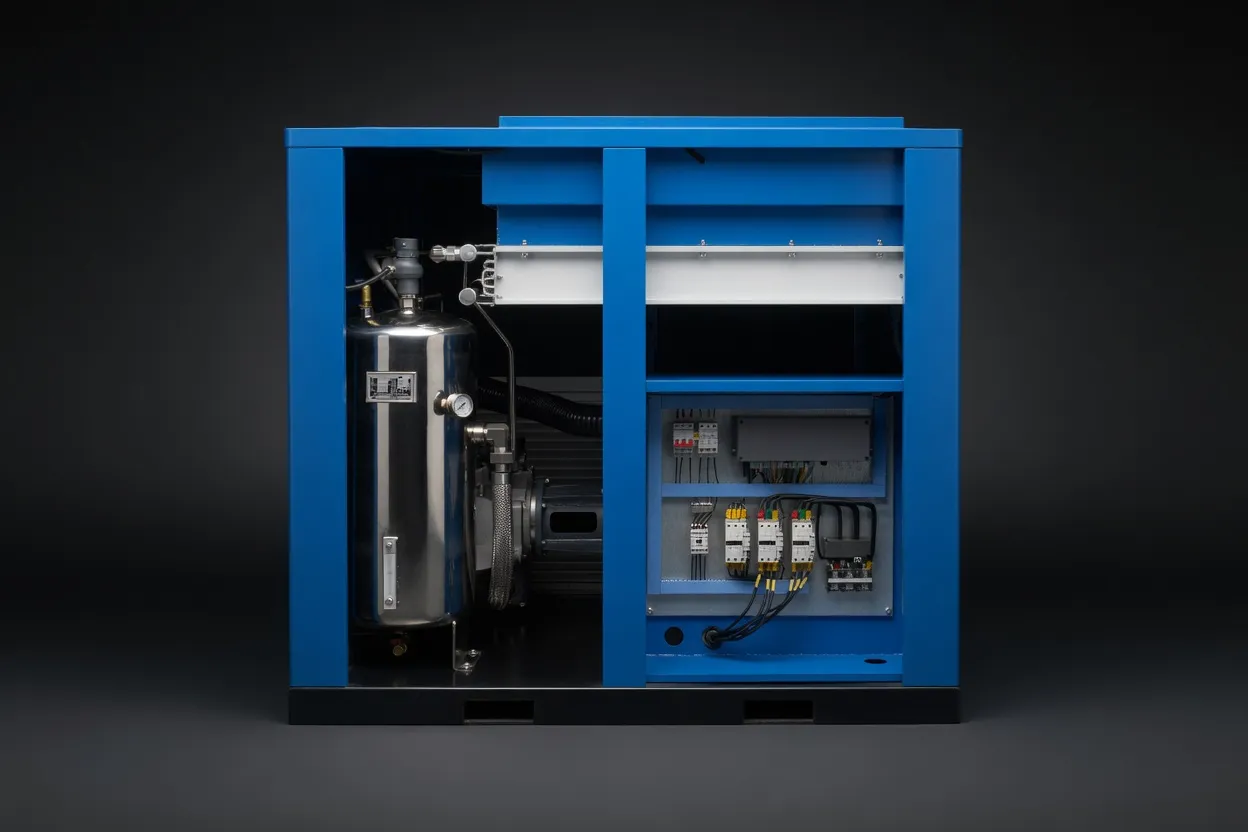
4. Fixed Speed vs Variable Speed Drive — The Energy Argument
For most industrial installations, the VSD (variable speed drive) water-injected oil-free compressor pays back its cost premium within 18–30 months through energy savings — but only when actual demand variation justifies it. If your process runs at near-constant load for 20 or more hours per day, seven days a week, a fixed-speed machine running at its rated efficiency point can match or beat a VSD unit on total running cost.
| Factor | Fixed Speed | VSD (Inverter) |
|---|---|---|
| Best for demand profile | Constant load ±10% | Variable 40–100% load |
| Energy saving at 70% load | Minimal (cycles on/off) | 15–35% vs fixed speed |
| Purchase price premium | Base price | +12–20% |
| Pressure stability | ±0.5 bar band | ±0.1 bar |
| Starting current | High (star-delta) | Soft start via inverter |
| Typical payback period | — | 18–30 months |
The decision rule is straightforward: pull twelve months of air demand data from your audit. If demand varies by more than 25% between peak and off-peak periods, the VSD case is strong. If the load profile is flat, invest the price difference in a higher-quality fixed-speed unit and extended service contract instead.
5. Air-Cooled vs Water-Cooled: Match the Site Infrastructure
Water-injected oil-free screw compressors are offered in both air-cooled and water-cooled configurations. The distinction refers to how the after-stage cooling circuit (for the compressed air and water circuit) rejects heat — not to be confused with the water injection medium itself, which circulates in a closed loop in both variants.
Air-cooled units use integrated heat exchangers and fans, requiring adequate ventilation airflow through the compressor room. They are simpler to install, need no external cooling water supply, and suit locations where cooling water is expensive, scarce, or unavailable. The drawback is that performance degrades in hot ambient conditions, and they add heat load to the building — a consideration in air-conditioned cleanroom buildings.
Water-cooled units connect to a cooling water circuit — typically a recirculating chiller or cooling tower. They operate independently of ambient temperature, deliver more stable performance year-round, and export their heat load outside the building. They suit large installations, hot climates, and facilities that already run a cooling water circuit for process equipment. The additional infrastructure cost and water treatment requirements need to be factored into the full project budget.
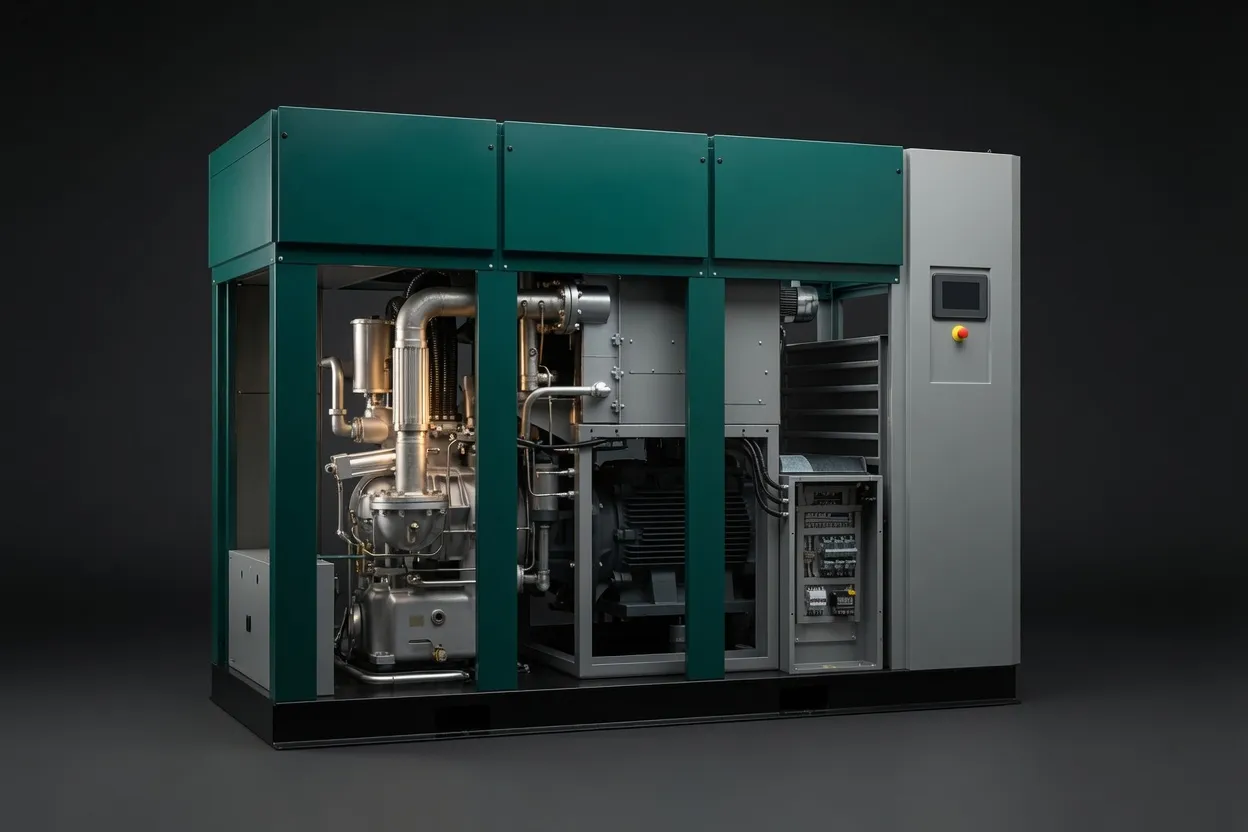
6. Water Circuit Design and Water Quality Requirements
The water circuit is the defining subsystem of a water-injected screw compressor and the component that most distinguishes it from every other compressor technology. Water circulates in a closed loop: injected into the compression chamber, separated from the compressed air in the water separator, cooled in the heat exchanger, filtered, and re-injected. This cycle repeats continuously at high flow rates, which means water quality directly governs compressor performance and service life.
Why RO-Treated Water Is the Standard
Tap water — even in low-hardness regions — carries dissolved minerals that concentrate inside the closed circuit over time, forming scale deposits on rotor surfaces, heat exchanger tubes, and water separator meshes. Scale reduces heat transfer efficiency, increases running temperature, and eventually causes rotor seizure. For this reason, virtually every serious oil-free water-injected compressor manufacturer specifies reverse osmosis (RO) treated water as the injection medium. RO water conductivity should typically be below 50 µS/cm, with pH maintained between 6.5 and 8.0.
Closed-Loop Makeup Water Management
Water is consumed during operation — primarily through evaporation into the compressed air stream and small quantities carried out with condensate. Makeup water consumption depends on discharge pressure, ambient humidity, and operating temperature, typically ranging from 0.5 to 2 litres per hour for a mid-size unit. An automatic makeup water system with a float valve or level sensor maintains circuit volume and keeps water quality stable between scheduled circuit changes. Confirm that the manufacturer’s package includes this, rather than relying on manual top-up, which leads to inconsistent water quality and unplanned downtime.
7. Verify ISO 8573-1 Class 0 Certification Before Signing
ISO 8573-1 Class 0 is the highest purity classification for compressed air — it mandates oil content so low that it falls below the detection limit of standard test instruments (effectively zero). In pharmaceutical, food, and electronics applications, this certification is not optional; it is a regulatory prerequisite. The challenge for buyers is that the term “oil-free” is used loosely in the market — an oil-free compressor design does not automatically deliver Class 0 air at the outlet of the treatment train.
What to request from any supplier: first, the third-party test report for oil aerosol, oil vapour, and total oil concentration at the compressor outlet, conducted by an accredited laboratory. Second, confirmation of whether the Class 0 rating applies to the bare compressor outlet or to the full package including separator, filter, and dryer. Third, the ISO 9001 quality management certificate for the manufacturing facility — this confirms that the production process is formally controlled, not just that one test unit passed.
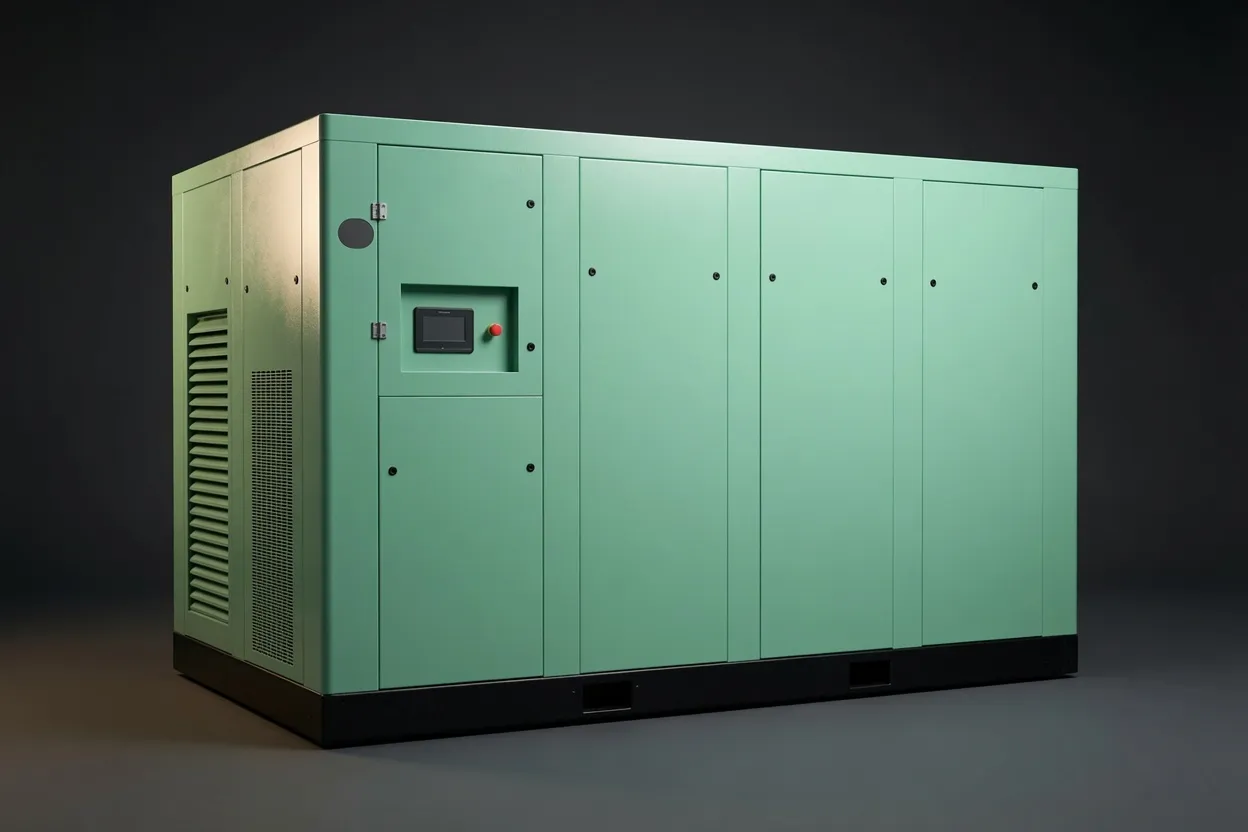
At Hangzhou Ever Power Air Compressor Co., Ltd., every water-injected oil-free screw compressor leaves the Hangzhou production facility with a full test report and ISO 9001:2015-certified quality documentation. Customers requiring pharmaceutical or food-grade evidence packs receive the complete certification trail as standard, not on request.
8. The Complete Selection Process — Step by Step
Audit Demand
Measure actual FAD consumption across all shifts. Record peak, average, and minimum demand. Add 10–15% for system leaks.
Map Pressure
Identify the highest-pressure end-use point. Add distribution losses. Specify minimum required discharge pressure to the manufacturer.
Define Environment
Record max ambient temperature, elevation, and inlet air quality. Provide this data in the enquiry specification sheet.
Choose Drive Type
Analyse load variation. Select VSD if demand swings exceed 25%. Choose fixed speed for constant-load, high-utilisation applications.
Select Cooling
Confirm availability of cooling water. Choose air-cooled for simple sites; water-cooled for large installations or hot climates.
Verify Certification
Request third-party oil content test reports, ISO 8573-1 Class 0 documentation, and ISO 9001 manufacturing certificate before ordering.
9. Why Hangzhou Ever Power for Your Water-Injected Compressor
Specification knowledge and supplier capability are not separable decisions. The most carefully engineered specification delivers no value if the manufacturer cannot hold it in production, verify it in testing, and support it through a 20-year service life. At Hangzhou Ever Power Air Compressor Co., Ltd., our water-injected oil-free screw compressors are manufactured under ISO 9001:2015 quality management at our Hangzhou, Zhejiang production base, with in-house rotor machining, water circuit assembly, and final performance testing on every unit before shipment.
We work with buyers at the specification stage — not just at the quotation stage. Our application engineers review your demand audit data, pressure map, environmental conditions, and compliance requirements, then recommend the model, drive configuration, cooling type, and ancillary equipment that fits the application. This pre-sale engineering review has no charge and is available to any serious industrial buyer via our contact page or directly at [email protected].
10. Four Selection Mistakes That Cost Plants Dearly
Sizing on Connected Load
Using nameplate consumption of every installed tool produces a compressor 40–60% oversized. Run an audit first.
Ignoring Water Quality
Using untreated tap water in a water-injected compressor causes scale, corrosion, and rotor seizure within months. Specify RO water from day one.
Accepting Verbal Class 0 Claims
Demand the actual third-party test report. “Designed for Class 0” and “tested to Class 0” are very different statements.
Neglecting Pressure Drop
Forgetting to add dryer and filter pressure drop when specifying discharge pressure means the compressor arrives correctly rated but delivers insufficient pressure at point of use.
Frequently Asked Questions
Ready to Specify Your Water-Injected Oil-Free Compressor?
Send your demand audit data, pressure requirement, and site conditions to our application engineering team. We will return a formal sizing recommendation within 24 hours — no obligation.
Hangzhou Ever Power Air Compressor Co., Ltd. · Shenhua Road, Hangzhou, China 310031 · +86 13083988828